A smarter way to manage used cooking oil
Fried food is a staple in restaurants, hotels, cafeterias, food halls, schools and entertainment venues across Los Angeles County. Every fryer eventually produces oil that is no longer suitable for cooking. Staff need a safe place to put it—and a dependable way to have it removed.
Oil poured into a sink, floor drain, toilet or storm drain can build up in pipes, restrict sewer flow and contribute to blockages and overflows. CleanLA’s Fats, Oils and Grease program advises keeping used oil out of drains and collecting it in a covered container for reuse, recycling or proper disposal.
The Grease Co provides used cooking oil collection and food-grade oil recycling for commercial businesses. We help kitchens review storage options, arrange pickup and coordinate collection alongside separate grease-management needs.
What Los Angeles food businesses need to know about FOG rules
FOG stands for fats, oils and grease. Local programs aim to keep FOG and food solids out of sewers. These materials can accumulate in pipes, even when the kitchen appears to be draining normally.
City of Los Angeles rules are not countywide rules
The City of Los Angeles FOG program regulates commercial food facilities through best management practices, grease removal devices where required and industrial wastewater permit requirements. These rules apply within the City of Los Angeles; a restaurant in another city should confirm its own sewer agency’s requirements.
County Public Works publishes restaurant pretreatment guidelines for facilities under its Industrial Waste Control program. Because the county contains many separate cities and sewer agencies, equipment, inspection and recordkeeping requirements depend on the facility’s jurisdiction. This guide does not replace your permit conditions or local authority’s instructions.
Fryer oil and grease trap waste need separate plans
Used fryer oil is collected directly from cooking equipment into dedicated storage. Trap and interceptor waste comes from wastewater pretreatment devices and includes water, food solids and other residues. A grease trap is not a place to dispose of spent fryer oil.
California’s CDFA inedible kitchen grease program distinguishes used cooking oil from interceptor or trap grease. Covered commercial transporters must be registered and maintain collection and delivery records. Confirm the applicable requirements and keep your pickup documentation.
Compare used cooking oil versus grease trap waste before setting up your kitchen’s two material streams.
How to dispose of fryer oil properly
A consistent kitchen procedure protects employees, plumbing and the surrounding property.
01
Cool and transfer safely
Follow your fryer manufacturer’s instructions and workplace procedures. Let oil cool as directed, use trained staff and protective equipment, and confirm that the transfer equipment and storage container are rated for the oil temperature.
02
Keep oil out of drains
Never pour fryer oil into sinks, floor drains, toilets or storm drains. Keep food scraps and liquid food waste out of sinks and garbage disposals, and wipe greasy cookware before washing.
03
Use a designated, covered container
Collect oil in equipment intended for used cooking oil, with a secure lid. Keep it separate from water, cleaning chemicals, trash and grease trap or interceptor waste.
04
Keep the storage area orderly
Maintain safe staff access, keep the lid closed and report leaks promptly. Avoid placement where a spill could reach a drain or walkway; review site-specific containment and property requirements.
05
Plan collection before capacity is reached
Discuss your oil generation and usable container capacity with the collection team. Review pickup frequency when menus, operating hours or sales change, and keep access clear for the technician.
06
Retain pickup documentation
Save collection records and follow the requirements applicable to your facility and transporter. Confirm transporter registration and ask what collection and receiving documentation will be provided.
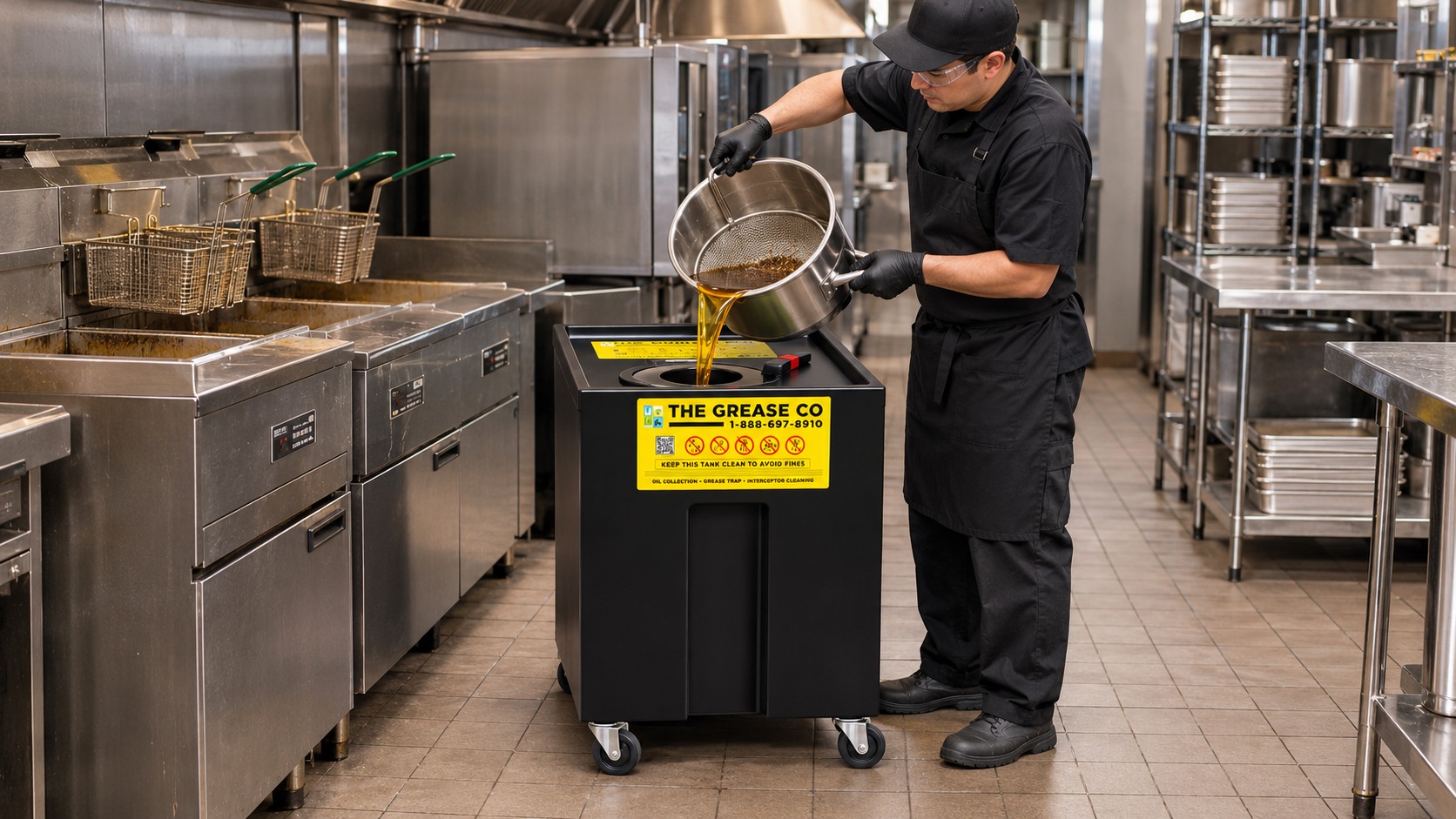
Choosing oil storage that fits your kitchen
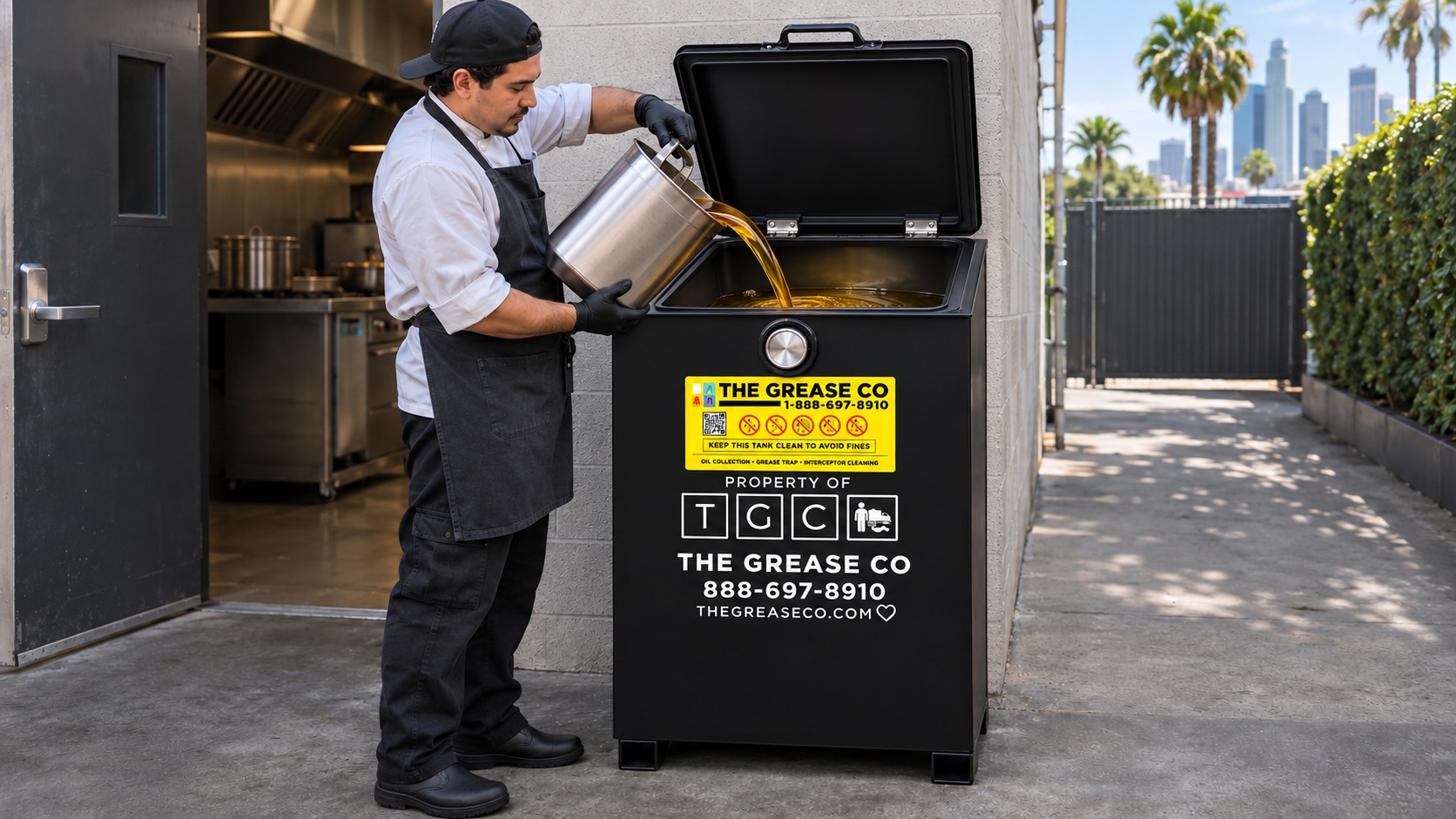
The right container is the one staff can use safely and technicians can reach reliably. A small restaurant with limited back-of-house space may need a compact indoor collection container; a high-volume kitchen may benefit from a larger outdoor tank near a service entrance.
Limited indoor space
Review aisle clearance, transfer distance and a stable storage position away from food preparation. Mobile equipment can help at appropriate sites, but wheels do not eliminate the need for safe placement, temperature compatibility and a clear collection path.
Outdoor tanks and service enclosures
A covered outdoor tank can preserve kitchen space and simplify collection access. Discuss secure lids, property approval, vehicle approach, rain protection and spill containment. A spill tray supports cleanliness but does not replace any containment required by your local authority.
Hotels, commissaries, food manufacturers and restaurant groups may need plans that account for multiple kitchens or larger oil volumes. The Grease Co can review placement, access, service frequency and equipment availability with your team.
Explore our indoor and outdoor used cooking oil storage guide or discuss bulk food-grade oil removal. Equipment and any charges are confirmed during evaluation.
Used cooking oil pickup across Los Angeles County
From busy downtown corridors and hotel districts to neighborhood restaurants and industrial food-production areas, collection starts with your address, oil volume and site access. Open an existing local service page below to discuss your location.
We also discuss service for Beverly Hills, Culver City, West Hollywood, Manhattan Beach, El Segundo, Santa Fe Springs and Compton. These locations are covered through our Los Angeles County collection program. Availability and scheduling depend on site access and route planning; contact us to confirm pickup options for your address.
Why kitchens choose The Grease Co
Oil collection works best as part of a dependable service relationship. The Grease Co connects cooking oil pickup and recycling with complementary grease trap cleaning and grease interceptor pumping. Ask about drain cleaning and related grease-management needs when planning your service.
One knowledgeable service partner gives operators a place to discuss oil storage, collection timing, grease-equipment maintenance and plumbing concerns. Oil and wastewater services remain separate so the right equipment, handling and records apply to each material.
Practical planning, clear communication
Bring your oil-volume estimate, container details and service-area photos. We can review access, collection frequency and documentation, then confirm workable arrangements. If oil quality and logistics support a purchase offer, we can discuss potential recycling value; payment is not guaranteed for every load.
For commercial kitchens choosing a long-term grease-management partner, that connected approach makes The Grease Co a strong choice. Learn more about our commercial service approach and what affects used cooking oil value.
A cleaner, easier routine for your kitchen
Start with a covered container, a clear staff procedure and a collection plan suited to your business.
Tell The Grease Co about your Los Angeles County kitchen, where you store the oil and how much you generate. We’ll discuss container options and pickup availability while keeping your oil recycling and FOG maintenance needs distinct.
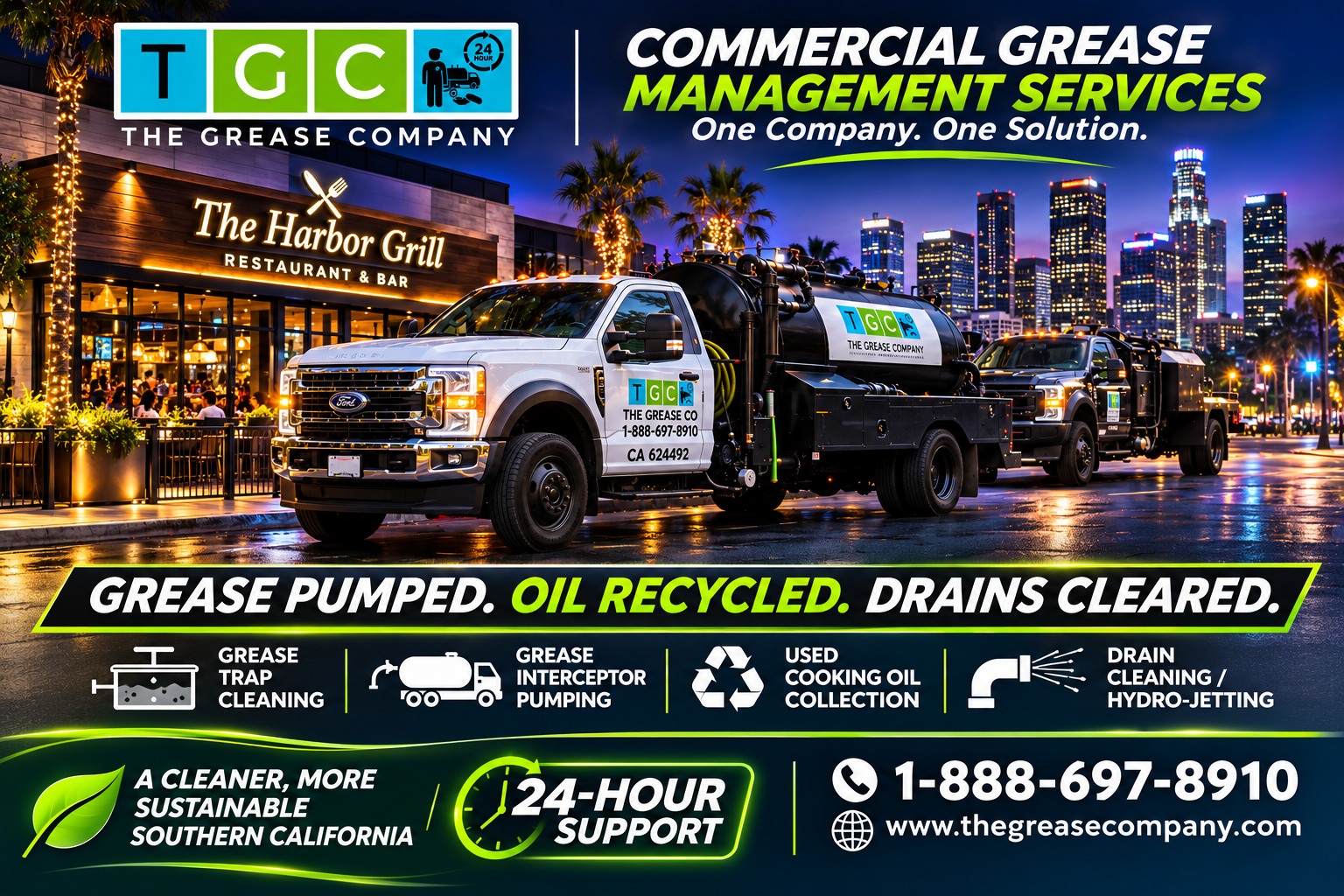
Grease pumped. Oil recycled. Drains cleared.
Official guidance for your service plan
- CleanLA — Fats, Oils and Grease program
- LA Sanitation — City of Los Angeles FOG program
- LA County Public Works — Restaurant pretreatment guidelines (PDF)
- CDFA — Rendering and inedible kitchen grease program
Requirements vary by jurisdiction and facility. Confirm current permits, device maintenance and recordkeeping directly with your sewer agency or local authority.