
Market update · November 23, 2026
Used Cooking Oil Prices Take a Small Dip: What It Means for Your Restaurant's Oil Rebate
Used cooking oil prices are easing, but your fryer oil is still worth money. Here's what's moving the market and how to protect your oil value.
If you run a restaurant in Southern California, your used cooking oil is more than waste. It's a commodity that becomes renewable diesel, biodiesel and sustainable aviation fuel — and its price moves with fuel markets, government policy and the price of soybean oil.
In mid-November 2026, Quantum Commodity Intelligence reported that North American biofuel feedstock values, including used cooking oil, had dropped to a seven-month low on weak demand, after several weeks of steady declines.
The short version: prices have backed off this year's highs, but they haven't collapsed. Used cooking oil is still worth noticeably more than a year ago.
Why used cooking oil prices are slipping
1. Soybean oil got cheaper
Renewable fuel plants can run on soybean oil, canola oil, animal fats or used cooking oil. When soybean oil drops, plants have a cheaper alternative, so waste-oil prices follow it down.
2. Energy markets cooled off
Renewable diesel competes with regular diesel. When crude and diesel prices fall, renewable fuel earns less and plants pay less for feedstock.
3. Refiners are buying less on the spot market
Many large renewable diesel producers already hold long-term supply contracts, so they aren't competing hard for extra loads right now.
None of this comes from restaurants doing anything wrong. It's a supply-and-demand reset at the fuel end of the chain.
A dip, not a crash
In early summer 2026, Fastmarkets assessed used cooking oil on the US Gulf Coast at about 86 cents per pound — the highest since it began tracking the market in late 2022. A seven-month low means prices have cooled from that peak.
Related fats remain above last year's levels. USDA's mid-November report put Midwest choice white grease at about 51 cents per pound, versus about 41 cents a year earlier.
What still supports demand
- Record fuel mandates. EPA set the highest-ever Renewable Fuel Standard volumes for 2026 and 2027.
- Tax credits favor domestic oil. Under current 45Z guidance, used cooking oil imported from outside Canada and Mexico doesn't qualify for 2026 fuel — an edge for oil collected here.
- Buyers are locking in supply. Phillips 66 signed a long-term used cooking oil supply deal for its Rodeo renewable fuels plant in the Bay Area.
What this means for your oil rebate
When used cooking oil prices fall, collector incentives usually ease a little too — a small trim, not a cut-off. How much depends on your setup:
- Index-tied rebates follow the market down and back up, usually with a one- or two-month lag.
- Flat per-gallon rebates are predictable and usually set with a cushion for soft months.
- Free pickup or service credits — such as free used cooking oil collection for qualifying businesses — barely move with the market.
A slightly smaller check this winter is normal. A sudden, large drop — or a collector who stops showing up or can't explain the change — is worth asking about. At The Grease Co, rebates and free service depend on oil quality, volume and location; call us and we'll walk you through your current terms.
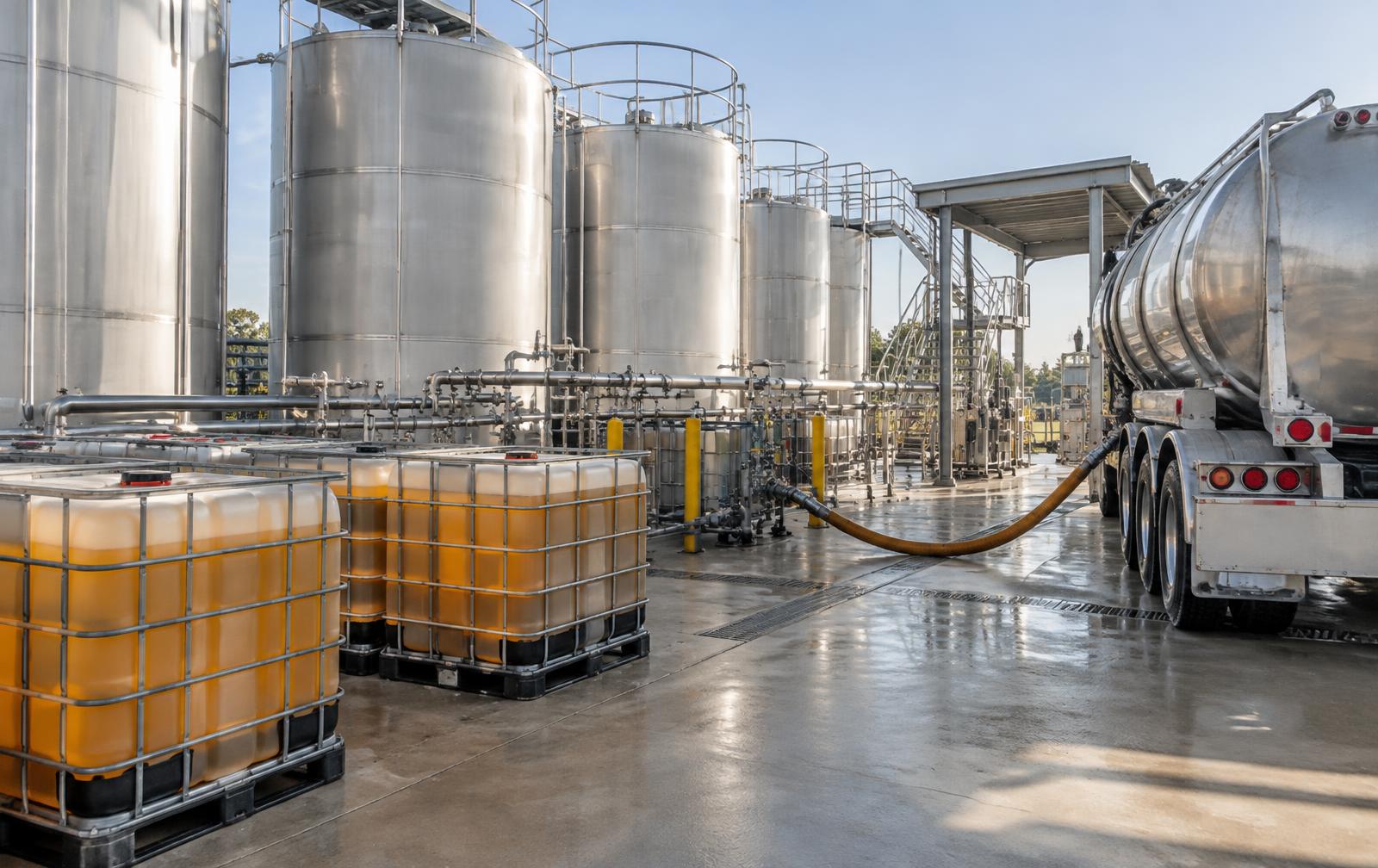
Five ways to protect your oil value when prices soften
- Keep water and food out of the bin. Strain oil and keep the lid closed when it rains.
- Never mix in grease trap waste. It can spoil a whole tank — see used cooking oil vs. grease trap waste.
- Lock your container. The North American Renderers Association estimated US oil-theft losses at $300–$500 million last year. Compare options in our storage container guide.
- Keep pickup records. Service logs reveal missing gallons and help with FOG inspections.
- Keep oil out of the drain. It costs rebate money and builds FOG in plumbing and sewers.
What to watch heading into 2027
- The final 45Z tax credit rules from Treasury.
- Soybean oil and diesel prices — when both level off, feedstock usually follows.
- California renewable fuel plants, whose buying shapes local demand.
Our view: used cooking oil stays a valuable, in-demand material in California. This winter's dip is the market taking a breather after a strong year.
Questions about your used cooking oil?
The Grease Co collects used cooking oil and services grease traps and interceptors for restaurants across Los Angeles, Orange, Riverside, San Bernardino and San Diego counties. Learn how collected oil becomes fuel on our cooking oil recycling page.
Sources
- Quantum Commodity Intelligence, Americas feedstocks, Nov 4 and mid-Nov 2026
- Fastmarkets, The low-carbon feedstock squeeze (June 2026)
- IndexBox summary of USDA feedstuff report, Nov 13, 2026
- EPA, final 2026–2027 Renewable Fuel Standard volumes
- Bloomberg Tax, IRS Notice 2026-53 and 45Z (Oct 2026); OPIS on final 45Z rule timing
- UkrAgroConsult, Phillips 66 UCO supply agreement (Nov 13, 2026)
- RFD-TV, Used cooking oil theft threatens biofuel feedstock supply